By: Sheridan Morby, Senior Research Economist, Florida Chamber Foundation
As 2025 comes to a close, the Federal Reserve has made final decisions on interest rates this year, with another .25 percentage point interest rate cut. There were two chapters for the story of inflation in 2025. In the first few months of the year, uncertainty surrounding national policy and little movement in inflation and labor market dynamics led to no change in interest rates. However, as the labor market cooled in the second half of 2025, the Federal Reserve began to lower interest rates, entering an easing cycle.
A steady labor market and uncertainty surrounding inflation in the wake of tariffs caused Federal Reserve officials to take a “wait and see” approach, but that ended as labor market figures started to cool. The Federal Reserve shifted their strategy in response to August data, when the U.S. employment rate ticked up to 4.3 percent, which at the time was the highest national unemployment rate since 2021. The U.S. job growth reported in August1 was much lower than expected – an addition of only 22,000 jobs over the month, compared to the expected 75,000. To stimulate the job market, which is one portion of the Federal Reserve’s dual mandate, the committee dropped the interest rate by .25 percentage points. Lowering interest rates means, for example, that it can be cheaper for businesses to finance their operations, allowing them to invest in hiring more employees. This continued to be their response in October and now December, as the labor market has not seen significant gains since.
While these decisions are made at the federal level, the employment situation is stronger in Florida than in the national labor market. Employment data released since the rate cuts began in September shows lower unemployment and faster job growth in Florida. The state unemployment rate is 3.9 percent, compared to the latest national rate, up another 0.1 percentage point since August, now 4.4 percent. The state has added jobs at a faster pace, growing by .44 percent in Florida compared to .43 percent in the US.
So, what does all this mean for Florida’s consumers and business owners? The federal interest rate cut has nationwide impacts, so we can expect to see modest boost to our already strong labor market in Florida. However, since the Fed’s rate cut is intended to stimulate the labor market, we don’t expect inflation to drop as a result. Currently, the national inflation rate is 3.0 percent, meaning prices today are 3.0 percent higher than they were a year ago. Although a rate cut doesn’t typically lead to lower prices for consumers and business owners, it does affect both the savings rate and the cost of borrowing. For people focused on saving, lower interest rates mean smaller returns on interest-bearing savings accounts. For people focused on borrowing (e.g., through a credit card loan, car loan, mortgage, etc.) lower rates mean borrowing becomes cheaper. As the cost of borrowing falls, consumers and businesses are more likely to spend which can boost overall economic activity and stimulate the labor market, but increased demand can also put upward pressure on prices. And the Federal Reserve is currently more focused on stimulating the labor market than the current inflation level, as evidenced by their three rate cuts in recent months.
Looking ahead to 2026, the Federal Reserve is signaling a moderate year for interest rate cuts, likely just one cut. In 2026, the Fed expects that inflation will not see much of an increase, because the impact of tariffs (which has largely been keeping prices high) will have been a “one-time price increase.” Their outlook for the year ahead is promising, but they also acknowledge that, in the words of Fed Chair Jerome Powell, “There’s no risk-free path.”
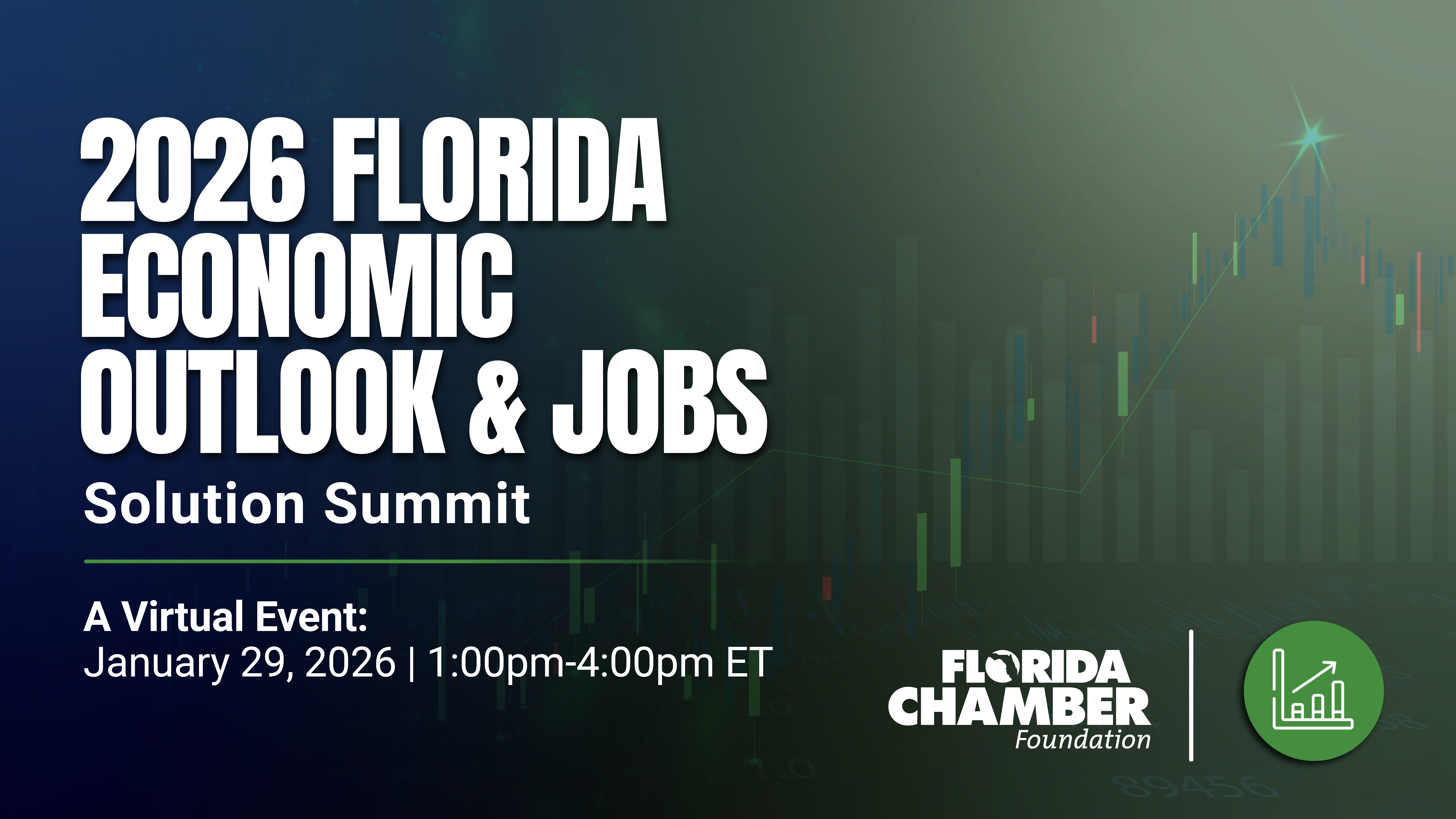
At the Florida Chamber Foundation, we know the best way your business can plan for the coming year is to be armed with data and projections on Florida’s and the national economy. At the Florida Chamber Foundation’s virtual Florida Economic Outlook & Jobs Solution Summit on January 29 from 1:00pm-4:00pm ET, attendees will receive an exclusive 2026 Florida economic forecast, a national economic outlook from our keynote speaker, Dr. Sean Snaith of the University of Central Florida, and invaluable insight into Florida’s evolving workforce needs, population growth, housing trends, and more. To tune in to these exclusive insights and how they impact your business, you can register by clicking here.
Stay Informed
To stay up to date as new data is released on interest rates, inflation, labor market statistics, and more, visit TheFloridaScorecard.org and subscribe to our Florida Chamber Foundation’s Florida By the Numbers economic updates for an in-depth analysis on how these figures impact the way we live and do business in Florida.
For questions about this update or to learn how you can get involved in driving the research securing Florida’s future, contact Sheridan Morby.
1The August 2025 total nonfarm payroll employment reported by the BLS has since been revised, now totaling a monthly job loss of 4,000 jobs compared to the initial estimated growth of 22,000.